Published on November 3rd, 2025
Transporting your vehicle from the U.S. to an international destination can feel overwhelming, especially if it’s your first time.
Whether you’re relocating abroad, selling a car overseas, or planning an extended stay in another country, international car transport requires careful planning and the right shipping partner.
This process involves much more than simply putting your car on a boat. You’ll need to navigate customs regulations, shipping options, insurance, documentation, and possible time delays.
Every step matters to ensure your vehicle arrives safely, on time, and within budget.
This article will walk you through everything you need to know about international car shipping. Let’s explore our comprehensive guide on how to transport a car overseas.
Choose the Right International Car Transport Company
Not all auto transport companies offer personalised support, especially when it comes to international logistics. It’s crucial to partner with a provider that specialises in Vehicle Transport Services with a proven track record in international shipping.
Things You Should Look for in a Shipping Company:
- FMCSA (Federal Motor Carrier Safety Administration) registration
- FMC (Federal Maritime Commission) licensing
- Experience with international shipping routes and regulations
- Transparent pricing
- Positive reviews and references
- Insurance coverage
How To Inspect Your Car for Overseas Shipping?
Thorough Inspection helps ensure a smooth transport process and protects the car in transit.
Therefore, prepare the auto properly before the shipping date and ensure that all relevant details are documented in case of damage claims. The following are a few basic steps to follow for vehicle readiness.
Wash, Clean, and Inspect.
Clean the car thoroughly, inside and out (customs may inspect it).
To comply with shipping regulations, remove any valuables or documents
Fuel Tank and Batteries
Empty the fuel tank until it is less than one-eighth level to avoid fire or explosive hazards.
Unplug the batteries to save from drainage, short circuiting, fire, or the release of corrosive fluid while en route.
Required Documents
International shipping requires careful documentation. Missing paperwork can delay your shipment or cause legal issues. You’ll typically need:
- Vehicle title and registration
- Copy of your passport or ID
- Bill of sale or proof of ownership
- Import approval documents for the destination country
- Custom clearance paperwork
Some countries have restrictions on the age, type, or emissions level of imported vehicles. Be sure to check with the destination country’s customs authority before shipping.
Operational Features
Turn off alarms and toll tags, empty the car, check the engine, headlights, indicators, and tyre inflation. These features are essential for proper loading and unloading
- Document existing damage with photos (to support any insurance claims).
At the time of pickup, ensure you receive a copy of the Bill of Lading, which serves as a receipt of goods, indicating a partnership of transport and proof of ownership.
Things You Should Know If Shipping an Electric Vehicle
Electric cars are considered hazardous cargoes due to a history of battery fires while in transit. Although the statistics are not high, there are some safety regulations in place.
There is a legal requirement for the Dangerous Goods Declaration (DGD) to be signed. Professional shipping companies sign the DGD and ship EVs with an added cost. There are also age restrictions on EV transport to limit the risk of on-board fire.
Understand the Costs Involved
International car shipping costs vary depending on several factors. An average cost for overseas relocation of a single car can be $900.
If transporting inside a shared container, the price estimate can be $1000 from the East Coast to Europe.
At the same time, shipping a single car in its own 20 or 40-ft container can increase the cost by a factor of two. Many variables are interlinked to decide the overall cost.
- Shipping method (RoRo, or Container)
- Vehicle size and weight
- Distance and destination port
- Customs duties, import taxes, and local fees
- Insurance coverage
- Storage fees, if applicable
- Time sensitivity (expedited shipping is more costly)
Selecting roll-on and roll-off vessels makes overseas car logistics more cost-effective than container shipping.
Another factor contributing to the expense is the distance from your location to the port of departure and then to the drop-off at the port of arrival, particularly in cases of door-to-door delivery.
To avoid surprises, request an all-inclusive quote from a vehicle shipping company and ask for a breakdown of all associated fees.
A professional company always provides immediate, transparent estimates with no hidden charges or upfront payments.
Decide on the Right Shipping Method
There are several methods to ship a car internationally, each with its pros and cons:
Roll-On/Roll-Off (RoRo) Shipping
RoRo shipping is a cost-effective international car shipping method. In this mode of transportation, a floating ship acts as a parking facility for driving on and off the car.
Once on board, the cars are securely fastened at their designated spots. You simply take the vehicle to the port, hand over the keys, receive it at the overseas port, and then take it home.
A car in Ro Ro shipping must travel empty; otherwise, it can cause additional fees and delays. There is also a chance of cosmetic damage due to port handling.
However, it is reliable, cost-effective, and operates on a fixed schedule. These vessels can transport thousands of cars at once, providing protection against environmental factors like saltwater and wind.
Container Shipping
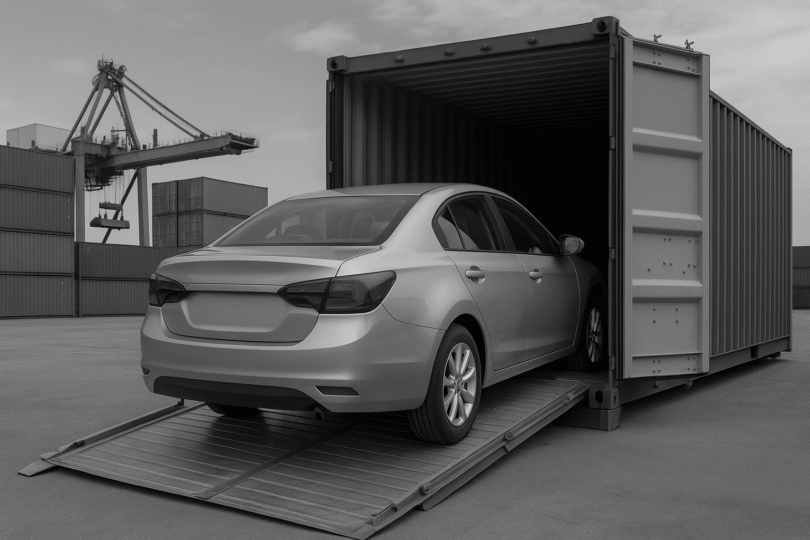
Container shipping is a mode of overseas car logistics that enables the movement of vehicles in large quantities, along with other personal items, within a container.
It is comparatively expensive than the RoRo method because in such a case, you pay for the container as well, rather than the car only. Container shipping has some limitations on the size and weight of its load.
When shipping inside a container, it is best to secure the car on the floor of the vehicle with ratchet straps and wheel chocks. You can also place some of the personal belongings or goods along with the automobile.
It is recommended to load the accompanying luggage first and then shift your car. Park the vehicle with the front windshield facing towards the doors.
It facilitates inspection by displaying a visible Vehicle Identification Number. There are two container shipping methods.
Single Car Container Shipping
A 20 or 40-ft container is used to ship a car as a single unit. Although it is expensive, it is suitable for classic cars, and you don’t have to wait for the container to be full to start the journey.
It is a safe method of international car transport, offering customisation and security throughout the transit.
Consolidated Container Car Shipping
In a shared container, multiple cars are loaded inside a single vessel. Although there is a risk of damage when moving bulk cars in a container, it remains a cost-effective option.
The overseas journey begins only when the container is fully loaded with cars and cargo. Although it is often time-consuming, it is the most commonly used car shipping method.
Know the Timeline for International Auto Shipping
Shipping a car internationally is not an overnight process. Timelines depend on the destination, shipping method, and whether you choose expedited car shipping.
The estimated timeline for standard ocean freight is approximately 3 to 12 weeks, whereas for express shipping, it can be 1 to 3 weeks.
Delays can occur due to customs inspections, weather conditions, port congestion, or incomplete paperwork. Always build in extra time when planning your move or travel.
Finally, transporting your car internationally doesn’t have to be overwhelming, but it does require preparation, research, and the right partners. Working with a trusted company ensures your vehicle is shipped safely, legally, and on time.
If you’re short on time or managing a tight schedule, efficient car shipping can give you peace of mind and reduce delays. It is best practice to plan early, understand your options, and stay informed, which are the keys to a successful international car shipment.
FAQs
Q1. How long does it take to ship a vehicle internationally?
Ans. The timeline to ship a car overseas can vary depending on several factors, including distance, the type of service (standard vs. expedited), the car’s condition, and the mode of transport (container vs. RoRo). However, on average, overseas car shipping can take between 1 and 12 weeks.
Q2. Can I leave personal items in the car while shipping overseas?
Ans. Generally not recommended, especially with RoRo shipping. Container shipping may allow it, but check with your transport provider, as it is not included in the insurance coverage, and there are customs regulations and the destination country’s legal requirements.
Q3. Container vs RoRo Car Shipping: Which One Is Better?
Ans. Both modes of transport have their pros and cons. Containers are expensive, especially when booking a single vessel for a single unit; however suitable for keeping luxury or classic cars safe from damage.
The RoRo method is cost-effective with a fixed schedule, but there is a risk of port handling damage.
In RoRo transport, multiple cars can be shipped in a single vessel. It is recommended to check the details of transport modes before booking, as per your car relocation needs.