Published on March 26th, 2026
When most people think about debt resolution, they picture urgency. Big payments. Extreme budgeting. Cutting everything fun. It feels like a sprint toward a finish line that cannot come soon enough.
But real debt resolution is closer to marathon training than a quick dash. If you approach it like an emergency that must be solved in three months, you burn out. If you treat it like a structured, multi year shift in how you handle money, you build endurance.
That shift in mindset changes your decisions. Instead of asking, “How do I get rid of this as fast as possible?” you start asking, “How do I build a life where debt stops controlling my choices?” That includes how you handle new borrowing, whether that is credit cards, personal loans, or even looking into ways to get more money on a title loan. Every move becomes part of a bigger strategy.
Debt resolution is not a reaction. It is a long term design.
Choose a Payoff Strategy You Can Live With
There are popular methods for paying off debt. The snowball method focuses on eliminating smaller balances first for quick psychological wins. The avalanche method prioritizes higher interest rates to reduce total cost over time. Both are valid.
The key question is not which one is mathematically perfect. The key question is which one you will actually stick with for several years.
The Consumer Financial Protection Bureau outlines practical approaches to tackling debt and emphasizes consistency over intensity. Their guidance on managing debt explains how choosing a structured plan and maintaining regular payments builds stability over time.
If knocking out small balances motivates you, go with that. If seeing interest charges shrink gives you satisfaction, lean toward the avalanche. Long term success depends on behavior more than theory.
Build Habits That Protect Your Plan
A long term debt strategy is fragile without protective habits. You can make aggressive payments for six months, but one unexpected expense can undo your progress if you are unprepared.
Start by creating a modest emergency buffer, even if you are focused on paying down balances. It does not need to be huge at first. A small reserve can prevent you from relying on credit when life throws a curveball.
According to the Federal Reserve’s reports on household economic well being, many Americans struggle to cover unexpected expenses. That data highlights why protection matters just as much as payoff speed. When you shield your plan from disruption, you keep momentum intact.
Also examine daily habits. Automatic transfers to savings. Scheduled debt payments. Weekly expense check ins. These small systems reduce decision fatigue and support long term consistency.
Design a Future Worth Paying For
Here is a perspective that often gets overlooked. Debt resolution should not just be about eliminating something negative. It should be about building something positive.
What are you moving toward?
Maybe it is home ownership. Maybe it is career flexibility. Maybe it is the freedom to travel or start a business. When your debt plan connects to a clear vision, sacrifices feel purposeful instead of punishing.
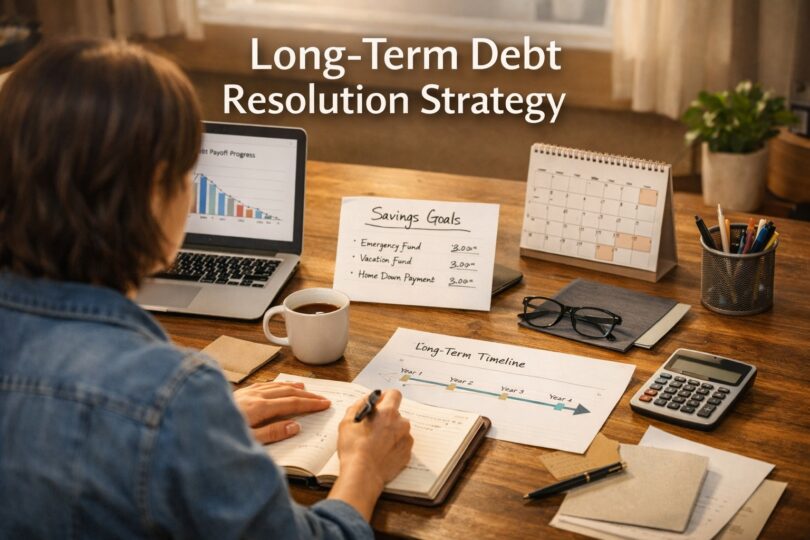
Write down your future goals in concrete terms. Put numbers next to them. If you want to buy a home in five years, research realistic price ranges. If you want to switch careers, calculate the savings cushion you will need. Then align your debt timeline with those goals.
This transforms debt resolution from a defensive posture into an offensive strategy.
Expect Setbacks and Plan for Them
Long term intention means accepting setbacks will happen. Income can drop. Expenses can rise. Motivation can fade.
Instead of pretending those risks do not exist, build flexibility into your plan. If you are making extra principal payments, know which payments are optional and which are required. If you are aggressively cutting expenses, identify which categories could expand temporarily without derailing your entire system.
When something disrupts your plan, adjust instead of abandoning it. Lower your extra payments for a month. Rebalance your budget. Reevaluate your timeline. The goal is sustainability.
Remember that progress over five years matters more than perfection in one.
Restructure Your Identity, Not Just Your Balance Sheet
Debt resolution at a surface level focuses on numbers. Balances. Interest rates. Monthly payments. At a deeper level, it is about identity.
If you see yourself as someone who is always behind, always stressed about money, you will make decisions from that mindset. If you begin to see yourself as someone who manages money intentionally, even while in debt, your behavior shifts.
Start identifying as a planner. A saver. A long term thinker. Celebrate milestones, but also celebrate consistency. Paid on time for six months straight? That is progress. Built a small emergency fund? That is progress.
When your identity evolves, debt repayment becomes part of who you are, not just something you are trying to finish.
Measure Progress Beyond the Balance
Yes, watching balances decrease is satisfying. But long term debt resolution involves more metrics. Track your net worth quarterly. Monitor your savings rate. Notice how your stress level changes over time. Pay attention to how often you rely on credit for everyday spending.
If your debt is shrinking but your habits are improving too, you are building lasting change. If your balance drops but you still feel out of control, something in the system needs attention. Long term intention demands a wider lens.
Play the Long Game
It is tempting to search for shortcuts. Quick fixes. Extreme payment plans. Radical budget overhauls.
But lasting financial stability rarely comes from dramatic bursts of effort. It comes from steady, deliberate action repeated over years.
Approach debt resolution as a structural life change. Choose a strategy you can sustain. Protect yourself against setbacks. Tie your plan to meaningful goals. Adjust when needed without giving up.
When you look back several years from now, you will not just see lower balances. You will see a stronger financial foundation, deeper confidence, and a system that supports the life you actually want to live.
That is what long term intention really means.