February 18th, 2022 | Updated on June 29th, 2022
Liquid nitrogen is a pretty well-known coolant. Even so, some are reluctant to make the switch due to concerns about the price, potential safety risks, and even potential inconvenience. Although, with all the advancements in liquid nitrogen storage, performance, and delivery, it’s worthwhile to readdress the option.
That said, whether you are searching for new microscopes, Petri dishes, cryogenic freezers, or any other lab essential, it’s essential to weigh in all the vital factors to ensure you make the best choice.
So, to help you make an informed buyer’s decision, in this article, we delve into some of the more prominent concerns for lab managers who are considering a switch in refrigeration solutions.
The Inconvenience Of Arranging Deliveries
A prominent concern for some is that it might be a substantial inconvenience to arrange deliveries for tank refills. However, thanks to tech developments, remote monitoring is often a feature you can opt for when using an LN2 freezer. With this, tank levels are monitored constantly, and when a particular level is reached, delivery is automated.
Not only does this enhance convenience, but it also prevents the possibility of ever encountering a shortage that results in downtime and several other errors.
Lab Usage Of Liquid Nitrogen Must Be High
In days gone by, liquid nitrogen services would only allow tanks to be used if consumption was high enough; this deters many lab managers from the storage solution, so things have changed.
Now, external tanks can be 200 liters. So, you can use liquid nitrogen services even with only two or three cryogenic freezers, depending on the size and consumption of each freezer. As a result, even smaller laboratories can now take advantage of liquid nitrogen storage solutions.
The External Tank
Some lab managers might shy away from this freezing solution due to the assumption that the external tank must be permanently fixed, and there is not enough space to accommodate this detail.
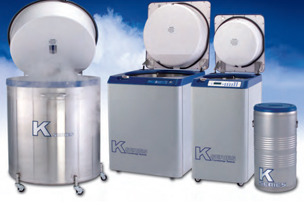
Fortunately, recent developments allow for tanks to be portable. Some are even available on wheels, which adds even more convenience during the refill process.
Deliveries Might Interrupt Work Functions
Another relevant concern is that refill deliveries might interrupt work functions. Although tanks are kept outside and even on wheels, there is no need to oversee the delivery process manually.
Liquid Nitrogen Burns
While many other concerns have been addressed through innovation and development, liquid nitrogen burns are still a relevant risk factor.
Fortunately, with suitable training and proper PPE, this risk lowers substantially. Regardless, appropriate personal protective equipment must be used when handling samples from a cryogenic freezer of any kind; this is a standard safety regulation in all bio labs regardless of the freezers.
The Costs
Lastly, the costs of liquid nitrogen, tanks, and deliveries might seem significant. However, making the switch can help reduce total operating costs by as much as 70%; this excludes the cost of running HVAC units required to counteract the heat produced from mechanical freezer devices.
Even though some are concerned about the safety risks of liquid nitrogen, risks can be mitigated with correct use. Beyond that, liquid nitrogen is also cost-efficient long-term, and convenient in terms of deliveries and tank storage.