October 5th, 2021 | Updated on May 30th, 2023
Everything we do, from the products we buy to those we eat, releases greenhouse gases into the air, leading to pollution. However, some things can have a greater impact than others. With that said, about 2.4% of worldwide CO2 emissions are from aviation.
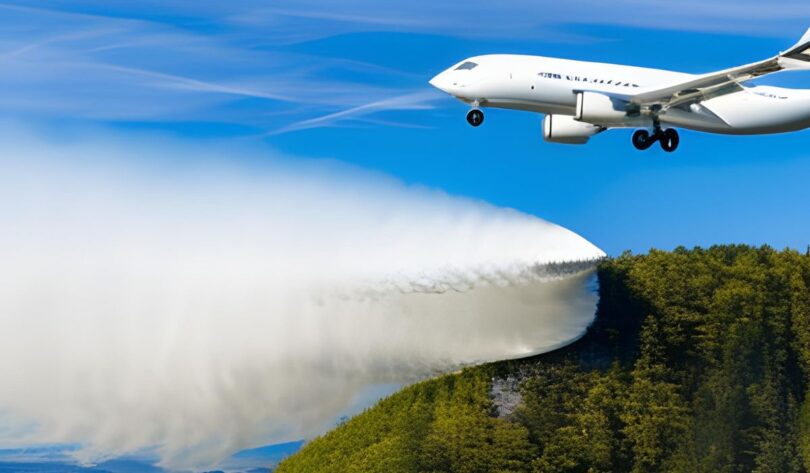
White plane streaks across the blue sky, especially on a sunny day, always leave most of us stunned with its beauty. However, this has a darker side.
These contrails may last a few hours. However, they are now so widespread that their global warming effect is even greater than the CO2 emitted by airplanes, which had accumulated since when the Wright Brothers took to the skies.
Planes Are More Carbon-intense Than Vehicles
Scientists have been trying to understand the effects of plane streaks on the environment. Planes are more carbon-intense than vehicles are. In 2018, a study showed that commercial airlines burned 94 billion gallons of fossil fuel worldwide.
Besides, aviation, on its own, is responsible for 2% of global carbon emissions. This number is believed will go higher in the coming years. Unfortunately, tracking those emissions is very difficult.
Moreover, planes leave contrails in the air, which are simply condensation lines whenever they fly. As a result, this water vapour further contributes to the greenhouse effect.
While the 2 per cent may seem like a small number, remember that air travel is rising and the consequences can be even more.
How Can One Mitigate The Carbon Emissions From A Flight?
Even though the responsibility of saving the environment largely depends on our industry leaders and big organizations, individuals can also help.
If you are thinking, “how can a single person make any impact?”. It is simple. Your own carbon footprint varies on a lot of factors whenever you use a flight.
For instance, whether you fly first class or economy, whether your aero plane has fewer emissions of biofuels, your flying stopovers, and how fuel-efficient your plane is.
For instance, if you fly non-stop, then you would have reduced your carbon footprint than having one with stopovers. This is because landing and take-offs are responsible for about 25 per cent of a flight’s emissions.
Furthermore, the flying economy is also better since each passenger’s part of the plane’s carbon emission is less. It also makes the plane fuel-efficient. You can also consider having a long vacation once than few short ones every year.
Another way you can help is to check the carbon offsets, which looks into how much carbon emissions are released into the air. This calculates the amount of carbon released in the air in your trip and converts it into a cost.
You can then decide to donate that amount to a conservation project that is helping remove emissions from flights. In 2018, some international airlines made carbon offsetting schemes available directly to their clients.
But some still offer it as an option. Lastly, you can consider carrying less stuff. The more the flight has to carry, the less fuel-efficient your trip will be.