Published on September 8th, 2026
The rapid growth of AI workloads is forcing data centers to rethink how they operate. Traditional approaches based on scheduled maintenance and reactive repairs cannot keep pace with increasing infrastructure complexity, higher compute demands, and evolving cooling requirements that come with AI compute.
This is where AI-powered automation comes in, helping organizations move toward predictive operations. Machine learning models, AIOps, and intelligent infrastructure systems can analyze operational data, detect potential failures, and optimize resources before issues impact availability. This shift is changing more than infrastructure management. It is redefining data center professionals’ responsibilities.
Gartner predicts that organizations will abandon 60% of AI projects through 2026 if those initiatives lack AI-ready data, highlighting the importance of strong data foundations for successful AI adoption.
For enterprise IT leaders, the focus is now on how teams must evolve alongside increasingly intelligent systems.
How AI-Powered Automation is Reshaping Data Center Operations
AI in data centers is shifting operations from reactive management to proactive, predictive decision-making. AI-powered systems now analyze large volumes of operational data continuously and recommend or execute actions faster.
Predictive Maintenance: Moving From Reactive to Proactive Operations
AI-powered automation is transforming how organizations approach maintenance. Traditional maintenance models often depended on fixed schedules or responses after hardware failures occurred. AI systems use machine learning models to analyze historical performance data, sensor readings, workload patterns, and environmental conditions. These models identify early indicators of potential failures before they affect availability.
For example, predictive analytics can identify:
- Storage devices showing abnormal performance patterns
- Servers experiencing unusual workload behavior
- Cooling systems operating inefficiently
This approach changes the role of infrastructure teams. Engineers spend less time responding to failures and more time improving reliability through preventive actions.
Intelligent Monitoring and Incident Management
Modern data centers generate massive volumes of operational data. Manual alert review creates delays and increases the risk of overlooking critical events.
AIOps addresses this challenge by applying artificial intelligence to IT operations. It analyzes events across servers, networks, applications, and infrastructure layers to identify relationships between different issues. For example, multiple alerts from different systems may indicate one underlying problem. Instead of reviewing each alert separately, AI correlates these events and identifies probable root causes.
This improves incident response by:
- Reducing unnecessary alerts
- Prioritizing high-impact issues
- Accelerating troubleshooting
- Supporting faster resolution
Human operators remain involved, but they shift their attention from monitoring every event to validating AI recommendations and managing complex incidents.
Digital Twins and Infrastructure Optimization
Digital twins are becoming an important capability in advanced data center management. These virtual representations of physical infrastructure allow organizations to simulate operational scenarios before implementing changes.
A digital twin helps teams evaluate:
- Cooling adjustments
- Capacity expansion decisions
- Workload distribution strategies
- Infrastructure modifications
When teams combine digital twins with their AI infrastructure management capabilities, they gain deeper operational visibility. They can analyze potential outcomes before applying changes to live environments. This reduces operational risk and improves planning accuracy.
Automated Resource and Energy Optimization
Energy efficiency has become a major priority as data centers scale to support AI workloads and other compute-intensive applications. According to the International Energy Agency (IEA), data centers consumed around 415 TWh of electricity globally in 2024, and this demand is expected to more than double by 2030 as AI adoption accelerates.
Autonomous infrastructure orchestration enables data centers to dynamically allocate computing resources based on workload requirements, power availability, and performance conditions. It improves overall energy efficiency without requiring manual intervention.
For infrastructure leaders, this creates measurable benefits:
- Better resource utilization
- Reduced operational costs
- Improved sustainability outcomes
- More predictable capacity planning
How the Human Role is Evolving in AI-Powered Data Centers
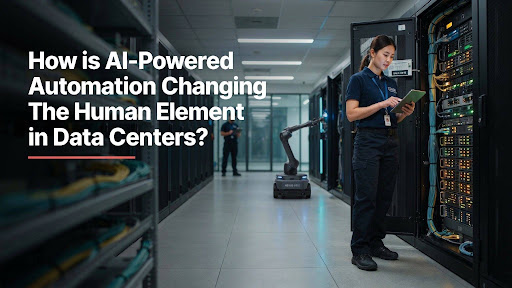
AI automation is not removing human involvement from data centers. Instead, it is changing how professionals contribute to infrastructure management.
From Operators to AI Supervisors
Historically, data center professionals directly managed many operational activities, including monitoring systems, reviewing alerts, and executing maintenance procedures.
AI systems can now automate many repetitive tasks. As a result, professionals increasingly supervise AI-driven workflows, validate recommendations, and define operational boundaries for automation. The role requires teams to understand both infrastructure behavior and AI decision-making processes.
From Reactive Troubleshooting to Strategic Planning
AI reduces the operational effort required for routine troubleshooting and allows infrastructure teams to focus on long-term improvements.
Professionals can dedicate more attention to:
- Designing resilient architectures
- Improving disaster recovery strategies
- Planning infrastructure growth
- Aligning technology decisions with business goals
The role shifts from managing individual incidents toward improving overall infrastructure performance and reliability.
From Execution to Governance
As organizations expand automation, infrastructure teams take on greater responsibility for governing AI-driven operations.
They define:
- Which actions AI systems can execute independently
- Which decisions require human approval
- How teams monitor automated outcomes
- How organizations manage operational risks
This ensures automation remains aligned with security requirements, operational objectives, and business priorities.
Challenges of AI-Powered Automation in Data Centers
AI automation provides significant benefits, but organizations must address several challenges before achieving highly autonomous operations.
Integration With Existing Infrastructure
Many enterprises operate complex environments that include legacy systems, hybrid cloud architectures, and specialized workloads. Organizations must carefully integrate AI automation into these environments. Poor integration can increase operational complexity instead of reducing it.
Data Quality and Model Accuracy
AI systems depend on reliable operational data. Inconsistent monitoring data, incomplete records, or disconnected systems can reduce the accuracy of AI recommendations. Organizations need strong data management practices to ensure AI models receive relevant and trustworthy information.
Security and Governance Risks
AI-enabled infrastructure introduces new security considerations. Automated systems may access critical operational environments, making access controls and monitoring essential. Organizations must establish clear governance frameworks around permissions, decision-making, and accountability.
Workforce Adaptation
The transition toward AI-driven operations requires organizations to rethink how infrastructure teams work.
AI changes responsibilities across operations, engineering, security, and governance functions. Teams must develop capabilities in areas such as AI operations, automation frameworks, data analysis, cloud infrastructure, and security practices. Organizations that prepare their workforce and operating models will be better positioned to manage AI-enabled environments effectively.
Why Human Expertise Remains Critical in AI-Driven Data Centers
Even highly automated data centers require human judgment because AI systems operate within defined patterns and available data. While AI can identify trends, recommend actions, and automate processes, humans provide the context required for complex decisions, risk evaluation, and accountability.
Business Context and Decision-Making
AI systems can identify technical issues and recommend solutions, but they cannot fully understand business priorities. For example, shutting down a workload may resolve a technical problem but disrupt operations. Human teams evaluate customer impact, business importance, and risk before approving critical actions.
Accountability and Compliance
Data centers support essential business operations, making accountability a human responsibility. Teams must ensure automated systems meet security requirements, regulatory obligations, and organizational policies. Human oversight keeps AI-driven operations aligned with enterprise expectations.
Managing Unexpected Situations
AI performs effectively when it recognizes familiar patterns. However, infrastructure failures, security incidents, and unexpected disruptions can create scenarios that require human reasoning. Experienced professionals provide judgment when situations fall outside AI models’ expected operating conditions.
The Takeaway: The Future of Human-AI Collaboration in Data Centers
The future of data centers will not focus on replacing people with automation. Instead, organizations will build environments where intelligent systems and human expertise work together. AI will continue improving monitoring, optimization, and operational efficiency, while autonomous data centers will become more capable of managing routine activities with minimal intervention.
However, implementing AI-driven infrastructure requires expertise in AI integration, automation design, and operational governance. Organizations that lack specialized capabilities or internal bandwidth often seek external support to build and scale these solutions. In these cases, businesses can hire AI developers to support implementation and build intelligent automation aligned with their infrastructure needs.
The human element in data centers is not disappearing. It is evolving from manual operations toward intelligent infrastructure leadership. Organizations that successfully combine AI capabilities with human expertise will be better positioned to build resilient, efficient, and future-ready data center environments.

Amelia Swank is a seasoned Digital Marketing Specialist at SunTec India with over eight years of experience in the IT industry. She excels in SEO, PPC, and content marketing, and is proficient in Google Analytics, SEMrush, and HubSpot. She is a subject matter expert in Application Development, Software Engineering, AI/ML, QA Testing, Cloud Management, DevOps, and Staff Augmentation (Hire mobile app developers, hire WordPress developers, and hire full stack developers, etc.). Amelia stays updated with industry trends and loves experimenting with new marketing techniques.