November 10th, 2023 | Updated on November 4th, 2025
Here Are Five Key Takeaways:
- Google’s Educational Advancements
- Comprehensive Learning
- Wide Subject Coverage
- 3D Visualization
- Responsibility in Usage
In a groundbreaking move, Google is taking strides to transform the way we engage with STEM (Science, Technology, Engineering, and Mathematics) subjects on our devices.
The tech giant recently unveiled a set of innovative features across its Search and Lens platforms, designed to make the exploration of complex math and science concepts more accessible, intuitive, and effective than ever before.
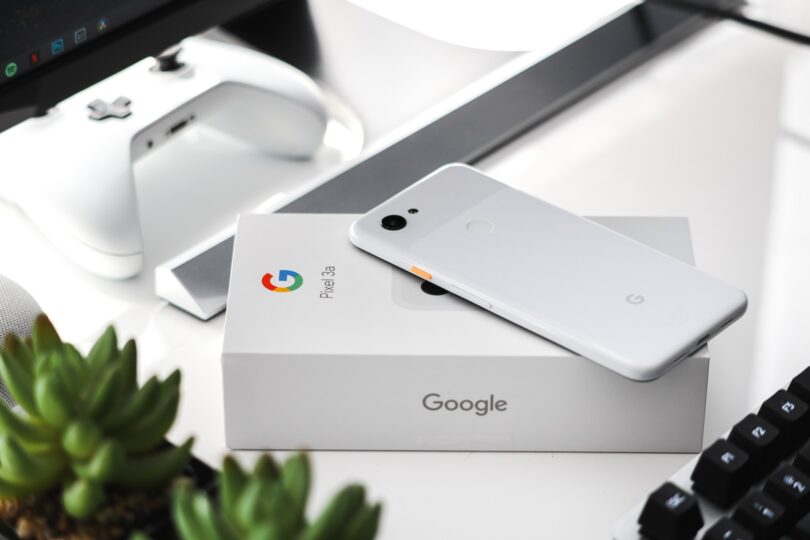
This exciting development empowers users to seamlessly convert their Google Pixel phones, along with other supported devices, into invaluable personal math and science tutors.
It’s a leap forward in educational technology that has the potential to revolutionize how we learn and understand these critical fields.
Study Math And Science Using Google Search And Lens

Google is changing the game when it comes to tackling those tricky math and science problems.
Now, you can simply input equations or snap a photo using Lens, and you’ll receive not just the answer but step-by-step explanations.
It’s like having your own personal tutor right on your Google Pixel phone or even on an iPhone, guiding you through the intricacies of subjects like trigonometry, calculus, and even those daunting word problems in high-school physics.
What’s more, the incorporation of advanced language models helps you identify known and unknown values, steering you towards the right formulas to use. Imagine never feeling stuck on a math problem again!
But that’s not all. Google is taking it a step further with a 3D visualization feature in Search. Now you can explore interactive diagrams covering biology, chemistry, physics, astronomy, and more.
These 3D models provide a deeper and more immersive understanding of STEM subjects. It’s like having a mini science museum in your pocket!
Google’s goal is clear: to fuel your curiosity and enhance your learning journey. It’s the kind of assistance many of us wish we had during our school days.
However, there’s a little catch to this digital magic. With Google Search and Lens so readily available, it might become quite a challenge for teachers to differentiate between genuine student work and AI assistance.
It’s a fascinating conundrum in the age of advanced technology in education.

The new capabilities offered by Google in its Lens app have the potential to be a powerful educational tool when used responsibly.
The ability to receive step-by-step explanations for math and science questions, it can greatly assist students and learners in understanding complex concepts.
This innovation covers a wide range of subjects, including trigonometry, calculus, and even challenging physics word problems.
The incorporation of advanced language models aids in identifying values and choosing the appropriate formulas.
Additionally, the 3D visualization feature in Google Search allows users to explore interactive diagrams in subjects like biology, chemistry, physics, and astronomy, providing a more immersive learning experience.
However, it’s essential to consider the responsible use of such technology, particularly in educational settings, where it may pose a challenge for teachers to distinguish between student effort and AI assistance.
Ultimately, this tool has the potential to enhance the learning process, offering quick answers and detailed explanations, making it a valuable resource for those seeking to expand their knowledge.
Feature Image Source: Sebastian Bednarek