October 4th, 2023 | Updated on November 4th, 2025
If you take a moment to observe your surroundings, you’ll likely notice a common thread among the people around you: smartphones.
These sleek devices have become a ubiquitous presence in our lives, with a vast majority of individuals, if not all, relying on them.
While their primary functions like calling, texting, photography, and entertainment are well-known, smartphones have also found their way into countless unexpected and fascinating applications.
It’s safe to say that smartphones have evolved into indispensable tools, deeply integrated into our daily routines.
When something becomes this vital to nearly everyone, it inevitably becomes a lucrative avenue for businesses to explore.
This has given rise to intense competition among companies vying for a larger share of this ever-expanding market.
Read more: Top Compact Android Phones Available For Purchase
The Excitement of Being Among the First in iPhone Launch Day Queues

The phenomenon of people going to great lengths, including camping out for days, to be among the first to buy the latest iPhone can be puzzling.
This behavior has persisted for 16 years since the first iPhone launch, despite the fact that anyone with the means and interest can eventually purchase an iPhone, even if not on launch day.
To understand this enthusiasm, it’s essential to first grasp what makes iPhones, and Apple products in general, so popular.
Research conducted on social media platforms like X (formerly Twitter), Reddit, and Google reveals several factors driving people towards iPhones.
These reasons include Apple’s reputation for better software optimization, a user-friendly interface, superior software support, premium build quality, seamless device switching, effective marketing, high customer satisfaction, strong security and privacy features, reliability, and a comprehensive ecosystem.
The preference for iPhones often boils down to personal habits and priorities.
Many users, regardless of their Android or iPhone background, choose devices based on their individual preferences.
Factors like software support for over four years may be enticing, but they may not necessarily prompt users to switch to an iPhone.
Similarly, debates over user interface and software optimization often revolve around comparisons with Pixel phones or Samsung’s flagship Android devices.
In the end, the choice between iPhone and Android is influenced by a combination of individual preferences, habits, and priorities, and what one values most in a smartphone.
While the iPhone launch-day frenzy remains a spectacle, the decision to join it or not ultimately hinges on a deeply personal calculus.
The Irresistible Allure of the Apple Ecosystem’s Seamless Integration:
Apple’s ecosystem is a significant advantage that sets the company apart from its competitors.
It encompasses a wide range of in-house tech devices that seamlessly integrate and work harmoniously with each other.
Once a user enters this ecosystem, often through an iPhone or a Mac, they are more likely to become deeply enmeshed within it.
While some critics refer to Apple’s ecosystem as a “walled garden,” it’s important to note that the closed nature of this ecosystem is a topic for another discussion.
What matters here is the strong attraction it holds for users.
Once individuals become part of this ecosystem, arguments like “Android is more customizable” or “offers a wide variety of hardware options” lose much of their appeal.
It’s akin to asking someone with deep family roots and a large social circle to uproot themselves from their home country and relocate to an entirely new one—a challenging and daunting prospect.
So, for existing users in the Apple ecosystem, upgrading to newer versions of Apple products is a natural choice due to the seamless compatibility and familiarity they enjoy.
Read More: 4 Things You Need To Check Before Buying A New iPhone Screen?
Demystifying The Psychological Drivers Behind The iPhone Frenzy

To gain insight into the psychology and motivations of customers interested in purchasing an iPhone, it’s crucial to recognize that these reasons can vary greatly from one individual to another and across different regions.
In my part of the world, I’ve often encountered two primary reasons for people switching to iPhones: 1) To further immerse themselves in the Apple ecosystem, particularly for those already using Apple products like Mac, and 2) Simply because it’s an iPhone.
While the first reason is straightforward, it’s the second one that warrants deeper exploration, as it holds the key to the central question posed in this article.
In many regions across the globe, iPhones have transformed into what economists call a “Veblen good”—a symbol of status and prestige.
Owning an iPhone is seen as an essential element of an elite lifestyle in various societies, and acquiring one on the launch day adds an extra layer of prestige.
It’s important to emphasize that discussing iPhones as fashion statements does not diminish their technological prowess.
Instead, it highlights how societies perceive this product.
While I’m not a psychologist, it’s clear that humans often yearn to be part of an exclusive club that garners envy and admiration from others.
This inclination helps explain the perpetual pursuit of financial success.
Apple laid the foundation for such an exclusive club in 2007 when Steve Jobs described the first-generation iPhone as “a revolutionary product that changes everything” during its unveiling.
The phenomenon of people queuing up to purchase a new iPhone on launch day originated with the very first iPhone and continues to this day.
This tradition remains remarkable, especially considering that you can easily obtain a phone within 1-2 days through e-commerce platforms. Yet, it has persisted over time and remains robust.
This enduring allure is precisely why the term ‘iPhone’ carries a premium recall value, unlike any other brand in the smartphone market.
It’s the driving force behind people’s willingness to queue up for iPhones—everything else simply follows suit.
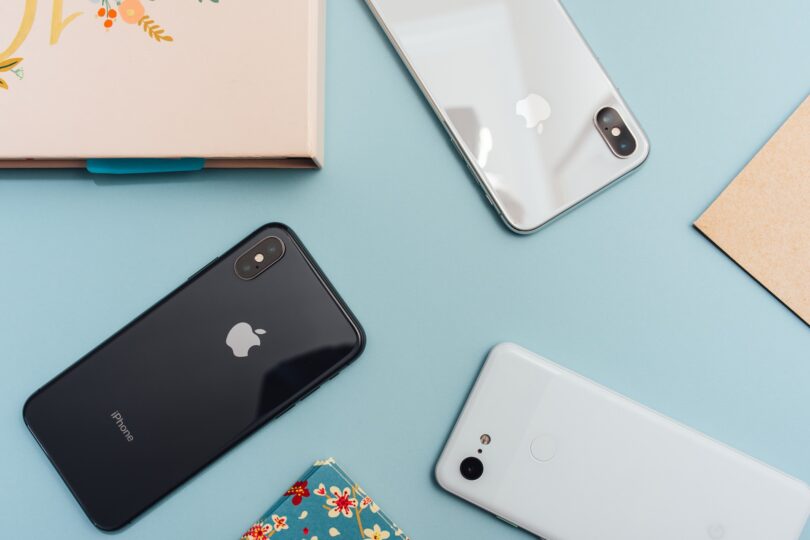
Feature Image Source: Arnel Hasanovic