April 22nd, 2026 | Updated on June 22nd, 2026
For generations, parents have kept their babies close by carrying them. This simple, intuitive practice, known as babywearing, has found a significant place in the lives of modern families.
Far from being just a convenient way to stay hands-free, it has evolved into a meaningful lifestyle choice that reflects a blend of practicality, connection, and personal style.
In a world that moves quickly, babywearing allows parents to integrate their little ones into their daily routines without pressing pause.
It’s about navigating a busy city, enjoying a walk in the park, or simply getting things done at home, all while maintaining a reassuring closeness with your child. This practice supports a life of continuity, where parenthood doesn’t mean stepping away from the world but experiencing it together.
An extension of personal style
Parenting gear has undergone a design revolution. Items once seen as purely functional are now opportunities for self-expression.
From strollers to diaper bags, today’s parents look for products that are not only practical but also align with their aesthetic sensibilities. This shift is especially evident in the world of babywearing, where form and function go hand in hand.
The design of modern baby carriers often features high-quality textiles, sophisticated patterns, and thoughtful details that transform them into stylish accessories.
For many, a carrier is as much a part of their daily outfit as a favorite coat or bag. It’s a statement that parenthood can be a seamless and stylish extension of one’s identity, rather than a departure from it.
Read More: How To Choose The Best Baby Stroller
The shift toward conscious materials
As consumers become more mindful of their choices, the demand for sustainable and natural products has grown, particularly in the baby industry.
Parents are increasingly scrutinizing labels and prioritizing materials that are gentle on their baby’s sensitive skin and kind to the planet. This conscious mindset extends to every purchase, from clothing to carriers.
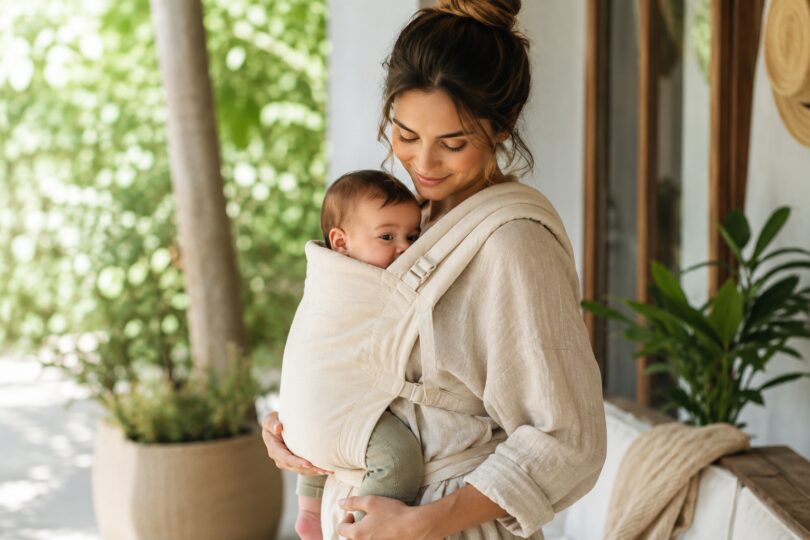
Choosing an organic baby carrier, for instance, is a decision that aligns with a desire for quality and sustainability. Natural fibers like cotton, linen, and silk are valued for their inherent properties, offering comfort and peace of mind. When selecting a carrier, parents often consider a few key aspects of the material.
- Breathability: Fabrics that allow for airflow are essential for comfort in various climates.
- Softness: A soft material is a top priority for something that will be in close contact with a baby’s skin.
- Durability and ease of care: Parents need products that are built to last and simple to maintain.
- Sustainable or organic sourcing: For many, knowing the origin of the materials is an important part of the decision.
Prioritizing comfort and support
Beyond style and material, the fundamental purpose of a baby carrier is to provide comfortable support for both the wearer and the child.
A well-designed carrier distributes weight evenly, reducing strain on the parent’s back and shoulders. For the baby, proper support is equally important for their comfort and posture.
Finding the right fit is a personal journey, as every parent and baby is different. While the options can seem endless, focusing on a carrier that feels secure and comfortable is key.
For specific guidance on positioning and use, it is always best to refer to the manufacturer’s instructions or consult with a certified babywearing expert who can provide personalized advice.
A practice of connection
Ultimately, the enduring appeal of babywearing lies in the simple, powerful connection it fosters. It’s a tool that supports a dynamic and engaged life while nurturing the bond between parent and child.
By combining thoughtful design, quality materials, and ergonomic support, babywearing has become a cherished practice that truly complements the contemporary family experience.